In the modern automotive landscape, the “new car smell” is becoming a rarer luxury. With the average price of a new vehicle skyrocketing and interest rates remaining stubbornly high, more drivers than ever are choosing to hold onto their keys for a decade or longer. According to recent industry data, the average age of passenger cars, SUVs and light trucks on U.S. roads has hit a record high in excess of 12 years. This shift reflects a fundamental change in consumer behavior: the car is no longer a disposable fashion statement, but a long-term asset that must be protected. While modern engineering has made cars more durable than their 1970s counterparts, there is no such thing as a “maintenance-free” vehicle. If you want your car to reach the 200,000-mile club—and do so without breaking your bank account with emergency repairs—you must prioritize essential car maintenance. This blog post explores why following your factory-recommended schedule is the single most important thing you can do for your vehicle’s health and your own financial well-being.
The Blueprint for Survival: Your Owner’s Manual
Most vehicles prior to 2020 come with a thick book tucked away in the glovebox: the Owner’s Manual. (Newer vehicles may provide the manual digitally). For many, the manual remains unread, a relic of the purchase process. However, this book contains the literal blueprint for your car’s survival. Vehicle manufacturers employ thousands of engineers who spend years testing components to determine exactly when they will likely fail under various conditions. The maintenance schedule they provide isn’t a “suggestion” to generate revenue for service departments; it is a calculated plan to prevent catastrophic mechanical failure.
When we talk about essential car maintenance, we are talking about preventive medicine for your machine. It is significantly cheaper to replace a $100 belt today than to replace a $5,000 engine tomorrow when that belt snaps. By adhering to the factory schedule, you are ensuring that wear-and-tear items are replaced before they can cause collateral damage to more expensive systems.
1. The Lifeblood: Fluids are the Foundation
Your car relies on various fluids to lubricate, cool, and transfer power. Over time, these fluids break down chemically, lose their protective additives, and become contaminated with microscopic debris and moisture.
Engine Oil: The Lubrication Standard
Oil is the most discussed aspect of maintenance for a reason. It reduces friction between moving parts that rotate thousands of times per minute. Modern synthetic oils last longer than old conventional oils, however they still oxidize and lose their viscosity. When oil breaks down, it turns into “sludge,” which can clog small oil passages and lead to engine seizure. Regular changes—usually every 5,000 to 10,000 miles depending on the manufacturer—ensure your engine stays clean, cool, and protected from internal scoring.
Transmission Fluid: The Forgotten Hero
Many manufacturers now claim “lifetime” transmission fluid. Professional mechanics, however, will tell you that “lifetime” usually means the life of the warranty—not the life of the car. Transmission fluid acts as both a lubricant and a hydraulic fluid. If it burns or becomes filled with metal shavings, your transmission will begin to slip, shift harshly, or fail entirely. A proactive fluid exchange is often the difference between a car that makes it to 200k and one that ends up in the scrap yard.
Coolant/Antifreeze: Temperature and Corrosion Control
Coolant doesn’t just keep your engine from freezing in winter; it prevents it from melting in the summer. More importantly, coolant contains anti-corrosive additives that protect the aluminum and iron components of your cooling system. Over time, these additives are depleted, allowing the fluid to become acidic. This acidity can eat through your radiator, water pump, and head gaskets from the inside out, leading to leaks that cause catastrophic overheating.
2. Breathing and Filtering: Protecting the Internal Systems
Your car needs clean air and clean fuel to operate efficiently. When filters are neglected, the engine has to work harder, which accelerates wear and tear on every component.
Engine Air Filters
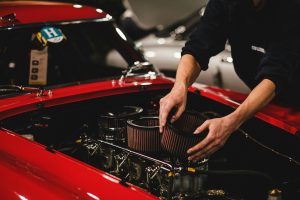
An engine is essentially a giant air pump. A clogged air filter restricts airflow, forcing the engine to compensate by burning more fuel to maintain power. This leads to poor MPG and carbon buildup on your valves and sensors. Replacing an air filter is one of the easiest and cheapest essential car maintenance tasks you can perform, yet it has a direct impact on daily fuel costs.
Cabin Air Filters
While this doesn’t affect the engine’s longevity, it affects yours. The cabin air filter cleans the air you breathe inside the car, removing pollen, dust, and pollutants. A dirty filter can strain your HVAC system’s blower motor and lead to musty odors, reduced AC performance, and increased allergens in the cabin environment.
Fuel Filters
As cars age, debris and sediment can accumulate in the fuel tank. The fuel filter prevents this sediment from reaching your fuel injectors. If injectors get clogged, you’ll experience misfires, poor acceleration, and eventually, the need for an expensive fuel system overhaul. Checking your manual for fuel filter service intervals is vital for long-term engine health.
3. Tires: Safety, Comfort, and Mechanical Sympathy
Tires are the only part of your car that actually touches the road. Their condition affects everything from braking distance to fuel economy and even the health of your transmission.
The Importance of Tire Rotation
Front tires and rear tires wear at different rates because of weight distribution (most engines are in the front) and steering forces. By rotating your tires every 5,000 to 7,500 miles, you ensure even tread wear across all four tires. This doesn’t just make your tires last longer; it protects your suspension and drivetrain. On All-Wheel Drive (AWD) vehicles, uneven tire wear can actually damage the center differential, leading to repairs that can cost thousands of dollars.
Wheel Alignment and Balancing
If your car pulls to one side or the steering wheel vibrates at highway speeds, your alignment or balance is likely off. Poor alignment drags the tires across the pavement at an angle, destroying the tread in a matter of months and putting unnecessary stress on your wheel bearings, tie rods, and steering rack.
4. The Financial Reality: Maintenance vs. Repair
Drivers may skip maintenance because they feel they “can’t afford it right now.” However, math rarely supports this logic. Maintenance is a controlled, predictable expense; repairs are chaotic, expensive, and often involve towing fees and rental cars.
| Service Item | Maintenance Cost (Est.) | Neglect Repair Cost (Est.) |
|---|---|---|
| Oil Change (Synthetic) | $80 – $250 | $4,000 – $8,000 (Engine Replacement) |
| Transmission Service | $200 – $350 | $3,000 – $5,000 (Transmission Rebuild) |
| Coolant Flush | $150 – $250 | $1,500 – $3,000 (Head Gasket/Radiator) |
| Timing Belt (if equipped) | $600 – $1,000 | $5,000+ (Total Engine Failure) |
| Tire Rotation | $30 – $50 | $600 – $1,200 (Premature Tire Replacement) |
When you perform essential car maintenance, you are effectively buying yourself a lower “cost per mile” over the life of the vehicle. A well-maintained car also retains a significantly higher resale value should you eventually decide to trade it in.
Conclusion: Taking Control of Your Vehicle’s Future
We are living in an era where the 200,000-mile car is a very achievable reality, however this isn’t an accident. It is the result of a partnership between the manufacturer’s engineering and the owner’s diligence. By staying on top of fluids, filters, tires and wear items, you ensure that your vehicle remains safe, efficient, and reliable for the long haul.
Don’t wait for a warning light to appear on your dashboard. Warning lights are reactive; they tell you something is already wrong. Check your manual, find a trusted local mechanic, and commit to a schedule of essential car maintenance today. Your car—and your wallet—will thank you for miles to come.